
Recycling
CVMR®’s Recycling of Energy Metals

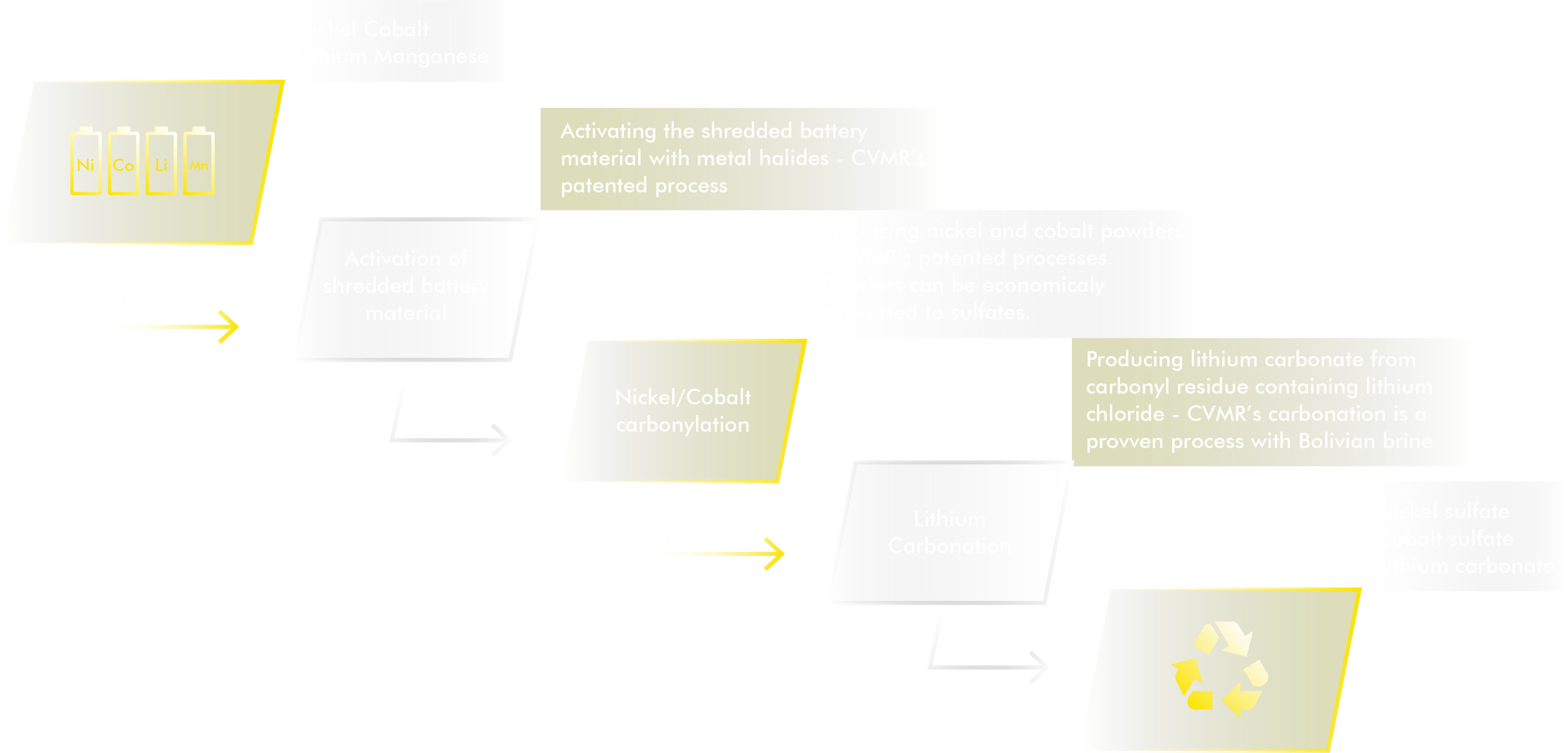


Recycling of Metals and Critical Materials
A practical overview of industrial metal recycling and circular economy strategies, including recovered feedstocks, modern recovery methods, high purity outputs, and the role recycling plays in supply chain security and sustainability.
Why Metal Recycling Matters for Modern Industry
Recycling is increasingly essential for meeting global demand for metals and critical materials used in energy storage, electrification, aerospace, advanced manufacturing, and electronics. As supply pressure grows, recovering valuable elements from end of life products and industrial waste becomes a key driver of long term resource security and sustainability.
The Importance of Industrial Metal Recycling
Industrial activity generates substantial metal bearing waste streams, including spent batteries, manufacturing scrap, catalysts, electronic components, and mineral tailings. Many of these waste sources contain critical metals that are strategically important for economic stability and national security, including lithium, cobalt, nickel, copper, rare earth elements, and related alloys.
Traditional mining and smelting alone often cannot meet rising demand at the required pace. Environmental constraints and geopolitical risks further limit access to primary resources, making recycling a strategic priority for resilient global supply chains.
What Materials Can Be Recovered
Modern metal recovery technologies enable efficient extraction and refining of valuable elements from complex feedstocks, including:
- Lithium ion battery black mass, concentrated material containing critical battery metals.
- High value industrial scrap metals, sourced from manufacturing and production processes.
- Metallic tailings and slurries, generated by mining operations and material processing.
- Components used in electronics, aerospace, and defense, containing strategic alloys and specialty metals.
- Contaminated or difficult to process materials, requiring specialized recovery and purification steps.
Recycling systems are designed to separate mixed metal inputs and refine them into forms suitable for reuse in industrial manufacturing.
Recovery Methods and System Design
Advanced metallurgical processes are used to recover metals from complex streams. One approach is vapour metallurgy, where volatile metal compounds are formed at controlled temperatures, separated from impurities, and converted back into purified metal states.
Depending on feedstock chemistry and target outputs, recycling systems may also use hydrometallurgical treatment, solvent extraction, or electrochemical steps.
How Facilities Select a Recovery System
- Feedstock purity and particle distribution, to determine separation feasibility and processing stability.
- Metal concentration and recoverability, to assess yield and economic value.
- Energy efficiency and environmental considerations, to reduce footprint and operational risk.
- Desired output formats, such as powders, compounds, or industrial grade materials.
Closed loop and sealed operations reduce chemical waste, prevent hazardous releases, and support safe handling across the recovery chain.
Outputs and Industrial Applications
Recovered metals and materials are refined into industrial grade products, especially valuable where high performance and reliability standards are strict. Typical outputs can support:
- Cathode and anode materials, used in electric vehicle batteries and energy storage systems.
- High strength and corrosion resistant alloys, for structural and industrial applications.
- Metal powders, for additive manufacturing and powder metallurgy.
- Conductive materials, used in electronics and renewable energy components.
- Specialty metals and compounds, supporting aerospace systems and high reliability components.
Environmental and Economic Benefits
Recycling reduces the need for raw material extraction, conserving natural resources and lowering associated emissions. Tailings and scrap can be repurposed rather than stored in landfills or stockpiles, reducing long term environmental risk.
Economically, metal recovery creates value from materials that would otherwise be wasted and provides manufacturers with more stable sourcing when mining supply is exposed to disruption or depletion. This strengthens metal recycling and circular economy outcomes.
Role in Supply Chain Security
Critical minerals support national infrastructure, defense readiness, and clean energy transition goals. As a result, many policies and industrial strategies focus on increasing domestic recovery capacity, reducing reliance on foreign sources, and improving responsible waste management.
The recycling of metals and critical materials helps reduce supply vulnerabilities and improves resilience to market and geopolitical fluctuations.
Building a Circular Materials System
Integrating recovered materials back into production reduces environmental impact and extends resource availability. This supports a circular materials system where the model shifts from extraction, use, disposal to reuse, modernization of refining technologies, and long term stewardship of finite resources.
What Comes Next
As recycling technologies advance, processes are expected to become more automated, precise, and energy efficient. Improvements are anticipated in separation chemistry, digital sorting, scalable processing modules, and environmental monitoring, reinforcing recycling as a cornerstone of sustainable industrial growth and material security.
Frequently Asked Questions
What makes critical metals recycling different from general waste management
Critical metals recycling requires specialized separation technologies, controlled handling, material characterization, and high purity output standards that conventional waste systems typically cannot achieve.
Why is battery black mass important
Battery black mass contains concentrated lithium, nickel, cobalt, manganese, and carbon materials. Recovering these elements supports rising energy storage demand and reduces environmental impacts tied to disposal.
Can recycled metals match the performance of newly mined metals
Yes, when refined to required purity levels, recycled metals can perform equivalently to mined materials in structural, electrical, thermal, and chemical applications across high reliability sectors.
How do facilities reduce safety risks during recovery
Sealed systems, gas recirculation, advanced ventilation, remote monitoring, and contamination controls protect workers and surrounding communities from hazardous exposure during recovery operations.
Why are companies adopting circular economy strategies
Businesses adopt recycling and circular economy approaches to reduce waste, improve supply security, lower environmental impacts, extend material life cycles, and strengthen compliance and sustainability profiles.