
Defence and National Security
Qualified supplier status
CVMR refines and produces high-purity metals, powders, coatings and specialized components for defence and national-security applications. Its technologies have been applied to projects involving defence systems, naval applications, secure currency production, radioactive-material decontamination and advanced government research. CVMR is a qualified supplier to NATO and has performed work for organizations including the Canadian Department of National Defence, General Dynamics, Rheinmetall Defence, the U.S. Department of Defense, Argonne National Laboratory, Oak Ridge National Laboratory, the U.S. Department of Energy and the United States Mint.
Defence and government programmes
NATO
Qualified supplier
Canadian Department of Defense
Qualified supplier

General Dynamics
Classified
Nickel vapour deposition

CTC, US Department of Defense
Confidential
Rheinmetall Defence
Nickel powder
Argonne National Laboratory
Classified
Copper vapour deposition

US DOE, Oak Ridge National Laboratory
Recycling zirconium cladding, iodide and chloride process

AREVA Federal Services LLC
DOE nickel decontamination projects

US Bureau of Engraving
Classified
Nickel vapour deposition, US dollar money plate
United States Mint
Coating coins with nickel
KBA-Giori
Nickel deposition on plastic money plate
science
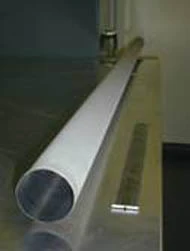
Sudbury Neutrino Observatory
High purity nickel tubes for neutrino detection
Separation of metals from radioactive contamination
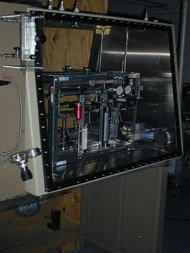
CVMR’s vapour metallurgy technologies can separate selected metals from radioactively contaminated materials by converting the target metal into a volatile compound while radionuclides and other non-volatile contaminants remain concentrated in the residual material. For nickel, CVMR has demonstrated this capability using carbonyl refining on radioactively contaminated material from U.S. Department of Energy gaseous-diffusion facilities. In testing carried out with Babcock & Wilcox, nickel was selectively extracted from contaminated feed material and recovered as purified metal. Analyses of the refined products found radionuclide levels below detection for the isotopes evaluated. CVMR has also worked with Oak Ridge National Laboratory on vapour-based recovery of zirconium from used nuclear-fuel cladding. In this process, zirconium is converted to volatile zirconium iodide, separated from non-volatile radioactive residues and subsequently recovered as metallic zirconium. These processes provide a means of recovering valuable metals from suitable contaminated materials while concentrating radioactive constituents into a substantially smaller residual stream for controlled management.
Purity as a qualification requirement
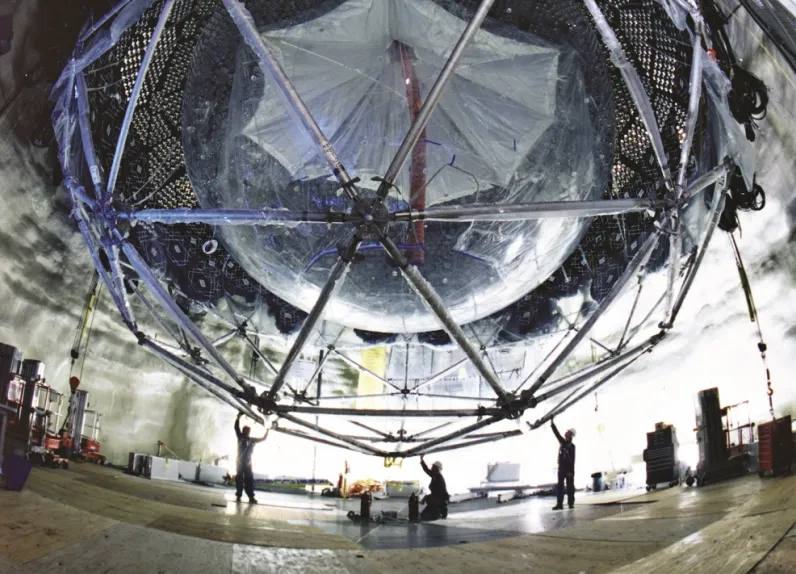
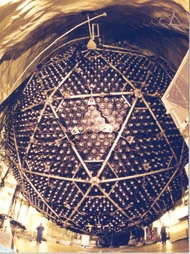
CVMR’s work for the Sudbury Neutrino Observatory demonstrates its ability to manufacture nickel components for applications with exceptionally stringent purity requirements. CVD Manufacturing Inc., a CVMR subsidiary, supplied approximately 1,200 high-purity nickel detector tubes for the observatory. CVMR reports that the tubes were manufactured to 99.9999% nickel purity with extremely low detectable radioactive emissions. For defence, nuclear and other high-specification applications, control of trace impurities can be an important material qualification requirement. CVMR’s vapour metallurgy processes combine metal refining with the production of powders, coatings and net-shape components, allowing high-purity material to be produced in forms suited to specific technical requirements.
Secure printing and currency programmes
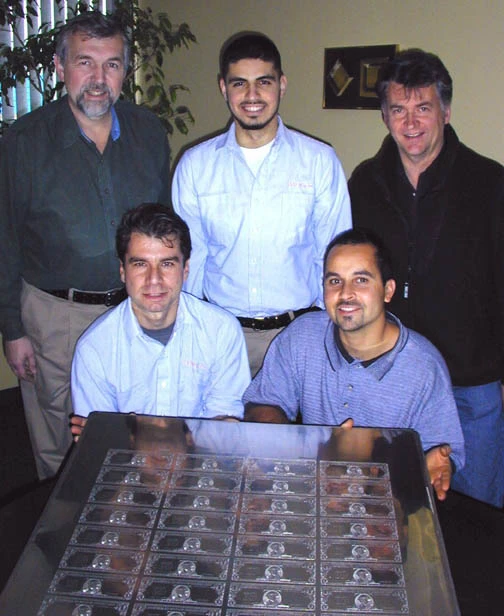
Nickel vapour deposition can reproduce fine surface detail from a master form while producing a solid nickel replica or printing plate. CVMR has applied this capability to the manufacture of U.S. dollar printing plates for the Bureau of Engraving and Printing and to nickel deposition on plastic money plates for KBA-Giori. CVMR has also worked with the United States Mint on the use of carbonyl nickel deposition for coinage. U.S. Mint testing evaluated CVMR’s process for depositing controlled nickel coatings onto coin substrates and planchets, including adhesion, coating thickness and suitability for subsequent striking.
Supply chain considerations
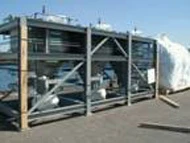
CVMR’s refining technologies can process a range of primary and secondary feed materials, including laterite and sulphide ores, concentrates, mattes, industrial scrap and other metal-bearing intermediates. This feedstock flexibility allows refining systems to be designed around available resources rather than relying on a single type of mineral feed. CVMR builds its refining plants on a modular basis. Individual modules can be installed as self-contained operating units and additional capacity can be added as feed availability and demand increase. For defence and strategic supply chains, this approach can support the establishment of refining capacity closer to domestic or regional sources of raw materials and to the industries consuming the refined products. CVMR operates laboratory and pilot refining facilities in Toronto, Canada, including pilot capacity of up to 500 tonnes per year. A CVMR vapour-metallurgy production facility operates at Galvanoform Gesellschaft für Galvanoplastik mbH in Lahr, Germany. CVMR also designed, engineered, assembled and commissioned the nickel carbonyl plant operated by Jilin Jien Nickel Industry in Jilin Province, China, and a carbonyl iron refinery in Bangalore, India.
Questions and answers
Is CVMR a qualified supplier to NATO?
Yes. CVMR is a qualified supplier to NATO alongside Argonne National Laboratory, the Canadian Department of Defense, the United States Department of Energy, Oak Ridge National Laboratory, the United States Mint and NASA.
Can the process handle radioactively contaminated metal?
Yes. CVMR’s processes were selected by the United States Department of Energy as the only processes capable of separating nickel, iron, cobalt and platinum group metals from radioactive contaminants.
Where are CVMR refining facilities located?
Laboratory and pilot facilities are in Toronto, Canada, with a largest pilot capacity of 500 tonnes per annum. A production facility operates at Galvanoform in Lahr, Germany. CVMR designed and commissioned the nickel carbonyl plant at Jilin Jien Nickel Industry in China, and a carbonyl iron refinery in Bangalore India.
Can refining capacity be established inside a host country?
Yes. CVMR builds refineries on a modular basis, with self-sufficient modules, which allows the plant capacity to increase gradually within an allied jurisdiction.